 Blog of Engagement
 Read 10 min,
BGV Group Management: How an Investment Company Creates Social Value
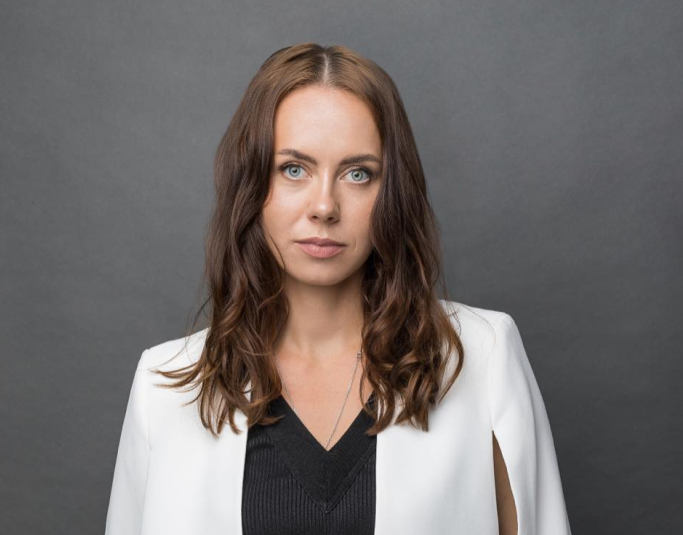
BGV Group Management exemplifies a business that has turned challenges into opportunities. BGV is a diversified investment management company founded in 2015 to create innovative and highly efficient businesses focused on producing high value-added products. The group has six business areas, within which it develops projects in mining, energy and infrastructure, retail, development, and sports and education. Despite the loss of some assets in the occupied territories, BGV has chosen to actively support Ukraine. The company’s charitable foundation embodies a new level of corporate social responsibility. Polina Aldoshyna, head of the BGV Charity Fund, talks about how the foundation was created, the challenges the team faced, and how they manage to maintain trust.
Please, share the story of the BGV Charity Fund. How was it created, and what goals did you set for yourselves?
For BGV Group Management, corporate social responsibility began back in 2015, with the creation of the Group’s first companies.
Already 10 years ago, our team actively collaborated with local communities where our projects were represented and signed social agreements. Then, every year, it allocated funds to address the social needs of communities, such as street lighting, road paving, renovation of hospitals and educational institutions, etc.
In the first months of the full-scale war, part of our business stopped: Some assets were damaged, some were occupied, and the BGV Group lost hundreds of millions of hryvnias. Nevertheless, we found the energy and resources to support people — both those within the company and the wider category of people affected by the Russian invasion. Over time, these efforts and resources were scaled up and systematized, resulting in the establishment of a corporate charitable foundation — the BGV Charity Fund.
In the early days of the war, business processes virtually came to a halt, but we had a tremendous desire to help. Thanks to our connections with foreign partners, the company was able to bring in humanitarian aid. Moreover, we were ready to distribute it.
On February 26, we created an employee chat to coordinate support and managed to set up processes over the phone. It soon got clear that the aid had to be systemic. Therefore, we decided to establish a foundation.
At first, we engaged in humanitarian aid from abroad. We had five warehouses: four in Ukraine and one in Poland. Aid shipments arrived in Poland, were inspected there, delivered to local warehouses — and from there, we distributed them and coordinated logistics throughout the country.
A year and a half later, when most business processes had stabilized, we could plan the CF’s activities. In almost three years of work, we have gained significant expertise and implemented successful cases, such as complete renovation of the Children’s School of Arts in Bucha and the opening of two psychosocial support centers in Zhytomyr. The experience gained allowed us to clearly identify key activity areas enshrined in the new strategy for 2025–2026: psychosocial support for the population, humanitarian crisis response, educational initiatives, and CSR projects of the group of companies, now mainly focusing on supporting sports and culture. And, of course, we continue to systemically help the Ukrainian Armed Forces — in 2024 alone, our support amounted to almost UAH 140 million. The lion’s share of these funds came from contributions made by the family of the CF’s founder Hennadiy Butkevych.
How did you form the CF team? Did you involve people from the charity sector, or did you look for them within your own team?
In its first year, the CF consisted exclusively of employees of the group of companies who worked on a voluntary basis. Over time, the business began to recover and gradually return to its processes, as far as possible. As it got increasingly difficult to combine employees’ main work with large-scale CF activities, we decided to form a separate team.
Currently, 37 people work for the CF — all hired according to standard procedures through the HR department. These are all full-time employees for whom this is their main job.
Only employees of the BGV Group Management group of companies work with us on a volunteer basis. For example, this is about IT support, whom we can turn to and who will share their knowledge. But they are not on staff, so I call their work volunteering. All employees of the group of companies willingly support the charitable activities of the CF and are happy to participate in its projects. People like charity, and for them, it is an honor to be part of the projects bringing real benefits to communities and vulnerable population groups. Our volunteers are motivated by the fact that they not just load a box into a car or create an app on the website, but that thanks to this app, a mother from Zolochiv village in Kharkiv region is able to receive help for her child. They thus directly affect the result.
Tell us how you track the success of your projects. Considering that you have this humanitarian focus, what are you able to measure?
The team establishing the CF was already a cohesive group of experts from our business structure. These were highly experienced and highly skilled people. Hence, we transferred most of the business processes and operational approaches to the CF’s work. In particular, thanks to our retail experience, we realized from the start that we needed to understand which trucks were coming to us, what they were carrying, and where they were going next. We knew right away how to do it. Therefore, from the very first days of its work, the CF set up electronic databases.
Approaches to measuring results were also taken from business. The CF has a supervisory board, which is presented with a budget, a staffing table, and an annual project plan with defined indicators and funding sources.
There are projects where KPI can be measured. For example, for two years in a row, we supported elderly people with food packages. We set ourselves a plan to cover 20,000 pensioners and collect food packages within a fixed budget — these are measurable indicators. If we managed to collect aid for 20,000 people, we fully met this KPI.
Of course, there are also projects that are not tied to anything material. For instance, this year we joined the First Lady’s Resilience Centers program. We won the competition and opened such a center in Zhytomyr region in May. It aims to provide social and mental health support to the population.
Since we have state co-funding for this center, the project involves generally established performance indicators, for example, the center must have a minimum of 500 visitors per month. However, as a team focused on the quality of assistance, we try to expand KPIs within such projects, supplementing them with feedback indicators, i.e., how many people returned for a second or third time, who attends these groups on a regular basis, how many people joined on a conditional referral basis, the number of people who left feedback, the dynamics of changes in the number of subscribers on social networks, whether people join to follow the news, the number of likes — all of this is also feedback from the population. If we see the dynamics are increasing, this indicates of our effectiveness.
You purchase aid in large quantities. How did you manage to organize this? Do you have any partners?
In the first months of the invasion, we began to receive humanitarian aid from Germany. Thanks to the trust and long-standing friendship with the team of the Wladimir Klitschko Foundation, we were able to help even more. In the first months of the full-scale invasion, they worked closely with German partners and received significant amounts of humanitarian aid but were physically unable to cope with its distribution. Hence, they brought us in as a reliable partner, and this cooperation became a starting point for further expansion of support.
We as a business, as well as our founder personally, have significant experience and an extensive network of partners, both in Ukraine and abroad. Years of cooperation provide a basis for the conclusion: We can be trusted. We always ensure quality project implementation and appropriate and efficient use of funds.
In other words, the two main reasons why we are trusted include our reputation and business contacts built up over decades, as well as recommendations from other partners with whom we have worked.
In the third year of the war, we reached a new, more systemic level. We actively attract grants from international organizations. To receive them, we need to undergo thorough checks, but we have no problems with that. We do this successfully, because, since the first year of the war, we have conducted regular independent audits and constantly work to improve our reporting processes and documentation.
You have many humanitarian projects, which means you mainly work with people. How do you avoid burning out? Have you ever encountered ingratitude from beneficiaries? We know that such stories greatly affect motivation — when people not only fail to express gratitude but sometimes even express complaints, for example, that the sunflower oil delivered is not of the right brand.
I would be lying if I told you that we don’t burn out and don’t get tired. Last December, we conducted an internal survey among the CF employees and volunteers, and its results showed a critical level of burnout. For me, this was one of the arguments in favor of expanding the team — not with volunteers, but with paid employees.
In 2024, we almost tripled our team, which made the work easier. Now, we try to hold small team-building events on a regular basis to relax a bit and regain strength. So, we definitely faced a burnout stage, but we coped with it. We don’t have any specific secret: Just reduce the workload, expand the team, thank people, give them time to rest — and everything will be fine.
As for beneficiaries’ ingratitude — it has always existed, and I think it always will. It is part of the culture of attitudes toward volunteers and charity in our society. After sleepless nights spent searching for resources, you sometimes encounter dissatisfaction over trifles, such as backpack color. Of course, this is upsetting and throws you off track for a while. But then you find the strength to work again, because there are far more positive reviews and gratitude than negative ones. It’s just that we tend to pay attention to the latter ones.
How do you decide that a project is not worth continuing?
For me, the main indicator is a project’s relevance to people. We don’t conduct in-depth sociological research before we start, and it happens that during implementation we realize that the project may lack demand at this stage.
For example, this summer, we launched a project to provide school supplies to children from vulnerable groups. At first, we focused on the first-graders among IDPs from the most vulnerable regions, but we received no applications. Then, we expanded our geography to the whole of Ukraine, involved bloggers and local authorities, but still received few requests. Finally, we expanded our audience to include not only IDPs but all socially vulnerable groups — and eventually distributed 1,200 backpacks. This showed us that such assistance is less in demand than we expected; so, we do not plan to repeat this project next year. Besides, projects are closed due to the lack of funding when donors are unable to continue their support.
How do you think the CF will develop after Ukraine’s victory?
The main value of our CF is that we also attract funds from investors and partners rather than just use our own funds. For every hryvnia from our own budget, we attract another 2–5 hryvnias in external aid. Therefore, we have decided that as long as we can cope with the amount of work and the amount of money and aid we attract, we will continue working in the post-war period.
We have identified three main areas that we want to focus on after the victory. The first one is to continue our projects providing psychosocial support to people, in particular the Resilience Center and the Mental Health Center for Teenagers “SviTy” (wordplay; lit. worlds and shine) in Zhytomyr. Although we primarily focus on veterans and their families, we understand that socialization and mental support after the war will be relevant to virtually everyone.
The second area is infrastructure restoration projects. I see potential in this as people will need a place to return to as well as will need to send their children to schools, visit hospitals, and receive social services. We have the expertise and separate departments that could implement these projects on a charitable basis.
The third area we will further develop is support for children — not in the context of crisis humanitarian response any more, but in the context of educational grants.
In other words, after the war, our CF will continue its work, though shifting its focus to other areas.
What motivates you? After all, when you work with people, you get a lot of energy from them on the one hand, but face many challenges on the other. Unlike the business sector, material motivation does not work here.
My main motivation is love for my country and its people. I follow the rule, “If everyone leaves, who will stay?” I’m also inspired by daily communication with people and military personnel telling fascinating stories, trips to the frontline territories, and stories from ordinary people. But what motivates me most to continue working is when I see how the assistance from our CF affects people’s lives and Ukraine’s recovery.