
 Blog of Engagement
 Read 7 min,
CSR at Ajax Systems: Always Focus on Doing rather than Talking
Is it always necessary to communicate about your social responsibility?
For four years, Ajax Systems has been strengthening hardware education in Ukrainian universities, with the third wave of intern engineers having already graduated within the Ajax Next initiative. This gradually changes the attitude toward technical professions, bringing them out of the shadow of more popular software specializations and, most importantly, motivating young professionals to stay in Ukraine and work here. Herewith, the company does not overly publicize its work with human resources in its own communication channels; instead, others talk about it.
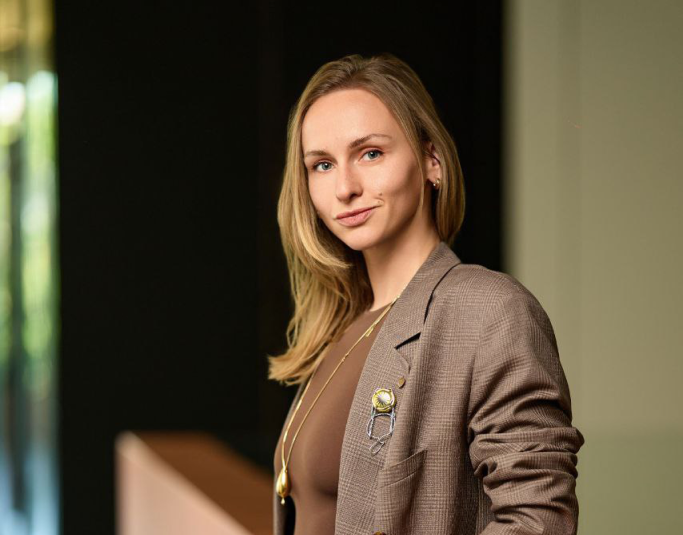
We talked to Vira Shcherbakova, former Head of Communications, about CSR at Ajax Systems and why some important things are better left behind the scenes.
What CSR areas does Ajax Systems focus on and how do they work?
We have several focus areas.
Ajax Next is our first communication platform that brings together all education and training projects. Its goal is to develop the country’s engineering elite.
Hardware education, to put it mildly, was not very popular during Ukraine’s years of independence. Therefore, we had a rather practical problem — we needed experts to hire for development and R&D who would grow in line with our business strategy. However, there were few of them, and they often lacked qualification.
So, we started communicating with universities, signing memoranda with them, and launching integrated education programs. We now set up laboratories at universities relevant to us and create certification programs and internships. We cooperate with the Kyiv School of Economics, Kyiv Polytechnic University, and Lviv Polytechnic University. We have recently opened a laboratory at the National Aviation University. This is the foundation for the growth of strong engineers in any country.
Even before we formalized this into a project with specific goals, we already did much, focusing more on people than on brand recognition. We therefore devoted more time to developing high-quality programs and training specialists. This is our investment in the future. That is why we did not talk much about our work on social media, as the project’s tasks were carried out without that.
The second focus area is support for the military. We have a veteran program, and we help both our colleagues who have joined the army and their units. But this is the basic need, we don’t even talk about it. In general, our credo is, “Focus on doing rather than talking.”
And, of course, our third focus area is the Air Alarm project.
Can you tell us more about it? How did Air Alarm come about?
Air Alarm is a project that came about because the central warning system was outdated, while we had the legal and technical ability to create applications for critical alerts. The Ajax Systems team and the Stfalcon.com team, with the support of the Ministry of Digital Transformation, managed to implement this in five days. Currently, the application is our social project for 28 million users.
We invest a lot of effort and resources in supporting and communicating Air Alarm, for this is an opportunity to demonstrate a product that is unique in the world. Famous actor Mark Hamill, who starred Luke Skywalker in Star Wars, is the voice of the app’s English version. For US citizens, installing Air Alarm is mandatory, along with insurance, when visiting Ukraine.
Foreigners often leave the app after returning home. It serves as a reminder of the war in Ukraine ongoing even when they come back to peaceful Europe.
What is your approach to partnerships? How do you choose which ones to talk about?
I should emphasize that we implement projects valuable to us not for communication purposes. For example, a few years ago, we ensured security for the Constitution of Pylyp Orlyk brought to Ukraine. We safeguarded one of the most expensive exhibitions in the world, i.e. Scythian Gold. We launched a project with Ukrzaliznytsia evacuation cars and participated in the renovation of the Ivan Franko Theater — we help them update their security systems. For us, these are important cases, while for experts, these are interesting challenges highlighting our capabilities level.
We collaborate with the UNITED24 platform, where, together with Timothy Snyder, we raised a large amount of money for systems to counter enemy drones. We also implemented a project with Olena Zelenska’s “How are you?” program so that people would pay attention to their condition after an air raid alarm and be able to use advice if they feel anxious or stressed.
However, we have to be very careful with fundraisers involving weapons, as well as in communications about helping the military. We definitely don’t talk about that.
How does Ajax budget for CSR and what resources does it allocate for non-commercial projects?
We have areas that we fix and initiate — these are Ajax Next and Air Alarm. There are no specific budgets that we spend here except for human resources. However, for Ajax Next, we plan a budget for hiring requests based on the overall CSR strategy.
When our employees carry out a non-commercial project, they still receive their salaries, because all of this is in line with our strategic goals. Up to 30% of our employees’ workload can be social, but this is not a side or additional story — these are projects that they want to be involved in.
How do you think your initiatives affect your employees?
They definitely have an impact. The Air Alarm project greatly inspired and supported the team’s spirit at the beginning of the full-scale invasion. Today, it commands respect for its importance to the country and its citizens.
Working with universities and developing hardware education is an important part of our business. We consider it our responsibility to continue developing this area.
The Ajax case study was included in the Corporate Social Responsibility Guide published by the Giving Tuesday team in late 2024. It contains over 60 interviews with businesses, foundations, and creative communities, as well as a roadmap for building CSR in a company. You can learn more about the Guide here.