
 Blog of Engagement
 Read 10 min,
“It’s Time for Unity Now”: How and with Whom 1+1 Media Cooperates
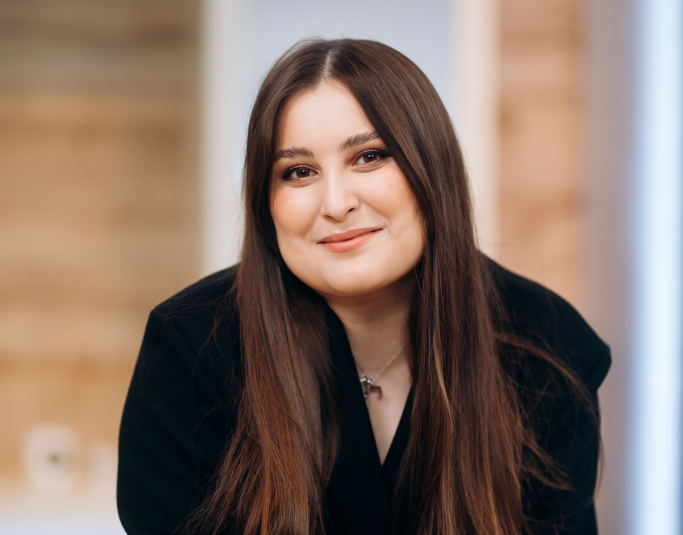
1+1 media is one of the largest media businesses in Eastern Europe, creating high-quality Ukrainian content that can change people’s perceptions of themselves and the world. The holding’s team has a clear civic position and is building a unique ecosystem of partnerships based on shared values, social responsibility, and support for cultural identity.
Read about the specifics of cooperation with various organizations, successful cases, and the criteria for selecting partners for joint projects in our conversation with Yana Lyakhovych, Head of Corporate and Integrated Communications at 1+1 media.
What does the 1+1 media partnership ecosystem look like now?
Social partnerships and collaborations are part of 1+1 media’s communication strategy. In turbulent times like these, everyone is facing hardships. Therefore, we are looking for win-win partnerships and enhancing corporate social responsibility projects and various events aligning with our brand platform to make them more visible. It’s time to unite now — we realize this and find strength in this.
There are several key causes we are working on. The first one is education, within which, for example, we develop a multi-genre project “Plus Ukrainian,” through which we revive our heritage, promoting the Ukrainian language and culture both internally and externally, engaging various businesses and organizations. We have also been providing media support for the Global Teacher Prize Ukraine national award for a long time, which is changing perceptions of Ukrainian teachers and proving they are important.
The second cause is supporting social initiatives with a focus on accessibility, inclusivity, reintegration of veterans, and volunteering. Among our own projects is the campaign for reintegrating veterans into civilian life, “Life After Scars,” in which we partner with robota.ua, INTERTOP, the Ministry of Veterans Affairs, the Heart of Azovstal NGO, and many others. Together with the Children of Heroes charitable foundation, we implement the Make Your Dream Come True project to make the dreams of children whose parents died in the war come true. It is important for us to enhance the awareness and resilience of society and, in particular, our employees. Since the demand for this is huge, we have many collaborations with various charitable and civic society organizations.
Our third cause is culture/cultural struggle: reflecting cultural diversity. Here, we have many thematic interactions, for example, with Ukrainian film festivals, some of which we’ve been supporting for decades.
How do you determine whether an organization can become your partner?
The first filter is whether it fits one of the communication causes we focus on. Reputation is also important: Every time we plan a collaboration, we conduct a thorough audit to decide whether we are on the same page or not. We care about quality partnerships that will indeed solve certain problems. And this is an important benchmark.
You are a large Ukrainian business. You can help some with your reputation, while others may simply want to take advantage of it. Moreover, cooperation may carry certain risks for you. How do you distinguish between people and organizations with whom you are considering a potential partnership?
First and foremost, we look at values and consider reputational risks. For us, partnership is not just about placing a logo, but also about an opportunity to reinforce an important idea or community. We clearly define our role: We do not try to “pull the blanket” over ourselves, and we are not aggressive in our presence. On the contrary, we integrate subtly and appropriately if a partnership really resonates with what we believe in.
Everything depends on trust and communication. If issues arise in the process, we talk about them directly. Brand recognition is both a resource and a responsibility. So, it is important for us to be sure that collaboration is based on sincerity and mutual respect.
Can an organization that has joined your situational project have a long-term partnership with you? And how does that happen?
Yes, and that’s how our long-term stories usually begin. A successful one-time collaboration often becomes the basis for a more systemic cooperation. We always analyze our first mutual steps, i.e., how open the partners are, how the synergy works, and whether there is a demand for continuation. That’s how our collaboration with the Children of Heroes foundation was born: From several powerful stories within the Make Your Dream Come True project, we moved on to a sustainable partnership. This is because we felt a response — both within the society and within ourselves.
What helps you understand whether you can enter into long-term cooperation with a particular organization?
We always consider the feedback and reflect on each project. This helps us understand how valuable, rather than just functional, the interaction actually is. A good indicator is new organizations approaching us at our partner events with a desire to join. This means that the interaction was valuable and transparent. So, we definitely have someone to move forward with.
Why do you think they come back to you? What is your secret?
Because we pay attention to details and don’t treat any interaction as “just another one.” We have well-established internal processes, a clear division of responsibilities, and, at the same time, humanity. We always ask ourselves: How did the partner feel about the project? Care is not a KPI, but it shapes reputation, which is key currency in our field.
When you start a new partnership project, do you form a separate team for it?
We create flexible project groups depending on the cause. Sometimes, we have one coordinator, and sometimes, we bring in speakers, create special content, and work with several departments. We have a group that deals specifically with social initiatives and communication through our hosts and employees.
It often happens that we get involved in some social activity and realize that these partners can join some of our other initiatives. We try to find the added value of large projects: This helps us achieve our communication goals by engaging in other campaigns or events of our partners.
In the previous series of interviews on corporate social responsibility, we’ve noticed that some businesses that communicate their assistance expect the media to report on them for free. Do you receive such requests? And does this consumerist attitude offend you?
We always make it clear that our partnership is about co-creation rather than automatic promotion. There is a lot of invisible work behind every publication, and we are responsible for what we recommend. We do not position ourselves as just a media outlet — we are part of the public dialogue. Hence, we select stories that make sense, not just newsworthy ones. There are many formats for promoting commercial projects, and our colleagues do a great job with this.
How often are you approached about partnerships on good but irrelevant causes? How do you respond to such requests? Do you help find those for whom cooperation may be relevant?
We honestly say that the issue is beyond our focus. Still, we don’t disregard it — we look for an opportunity to forward the request to our colleagues in the holding company or even on the market, if appropriate. Sometimes, saying “no” is an act of respect, too. We don’t take on more than we can deliver properly.
How do you keep control in long-term partnerships?
We don’t repeat decisions from year to year but look for a new angle, a different interpretation of the task. Even if the partnership lasts for several years, each iteration is like a separate story with a new idea. This allows us to maintain emotional involvement and solve communication tasks more efficiently.
What are the distinctive features of working with charitable or civic society organizations, businesses, and government institutions?
In all cases, we prioritize trust, shared values, and the human factor. But at the same time, we have a basic “framework” approach: memoranda, technical conditions, and agreed tasks. When it comes to the true qualitative changes that we and our partners can implement, such as the 1+1 media #forgetaboutage project against ageism, we are happy to bring together businesses, CSOs, and the state. And we see our example inspiring other companies.
Can you recall any successful projects with the state you had before the full-scale invasion?
We worked closely with the Ministry of Social Policy on the #forgetaboutage project. Our colleagues also cooperated extensively with the Ministry of Health within the Make Your Dream Come True initiative, which fulfilled the wishes of children battling illness. The collaboration was quite fruitful during the COVID-19 pandemic, too.
These were mainly information campaigns and social initiatives to reinforce messages important to society. Among the most successful were those on vaccination, mental health support, and work on the issues of inclusion and ageism.
Once a project is complete, how do you maintain contact with your partners?
For us, a partnership does not end with the last publication. We maintain active contact, find interaction points for the future, and if the project was episodic, leave room for return.
What motivates your team?
Drive and involvement into something truly significant. The projects we implement do change the society for the better, and that can’t help but motivate. Importantly, 1+1 media has created a comfortable space for its employees to implement their ideas. One of the latest striking examples is the Life After Scars television project, which is broadcast on the 1+1 Ukraine channel and Kyivstar TV. My colleagues in communications and I developed the idea for the program, scaled it up, gathered a film crew on our own, and delivered a virtually finished product, which was successfully launched and found its target audience. This is very important to us, since the project explores issues such as veterans returning to civilian life, how the society should prepare to that, how it should communicate, and what it should do in certain situations.
Such projects inspire the team, proving that nothing is impossible.