
 Blog of Engagement
 Read 15 min,
“Tying Knots”: How the ЗMIN Foundation Is Building a Partnership Ecosystem for Sustainable Development
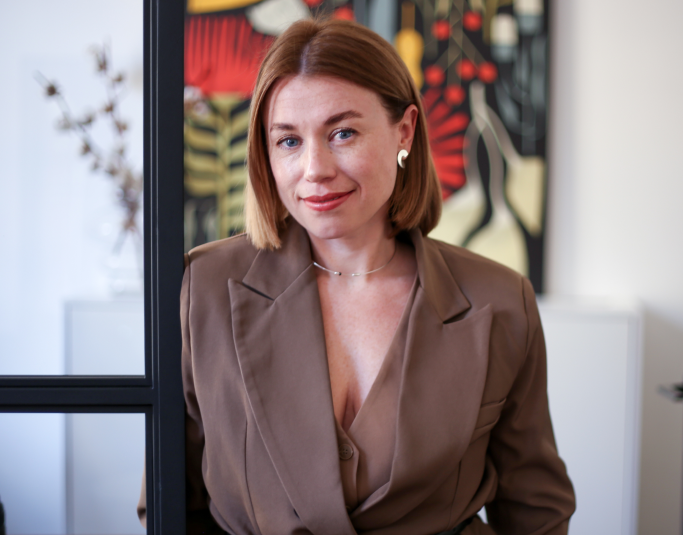
ЗMIN is a private Ukrainian foundation created to systemically and meaningfully influence social change. The institution operates exclusively with its own capital. The main focus of ЗMIN’s activities is to strengthen civil society organizations in terms of resources and finances through the formats that are common for the sector: providing grants and scholarships, sustainable strengthening of initiatives, offering systemic institutional support, and co-creating projects.
The framework for selecting partnerships includes a stable team, systemic thinking, portfolio of effective solutions, and desire to cooperate on equal terms. For ЗMIN, it is important that cooperation with partners clearly reflects the current context and, at the same time, there is an understanding of long-term impacts. Since 2021, the Foundation has brought together more than a hundred partner organizations into a single ecosystem of strategic influence.
We spoke with ЗMIN Foundation Director Khrystyna Boyko about how their team builds community, how they choose partners, what red flags they respond to, and how they handle requests for cooperation that do not fit their strategy. Find the details in our conversation.
What do you mean by the term “partner”? Who is a partner for you, and who is not?
For us, partners are organizations that we strengthen and interact with. These are also foundations and donor structures with which we build horizontal relationships. In addition, we refer to our community of founders as partners.
Since the beginning of our public communication, we have deliberately avoided using the terms “grant recipients” or “beneficiaries” in relation to the organizations we support. In the ЗMIN ecosystem, we consider partners both those who apply to us for scholarship support or grants at formal contests, and those who do not request financial or resource support from us but with whom we closely interact on various platforms, exchange expertise, etc.
Am I right that you are essentially the core for all your partners? They don’t interact with each other without you?
Organizations can certainly cooperate without our participation, but the ЗMIN partner ecosystem is one of the key values we are developing. Its main goal is to unite, stimulate connections between active teams, add volume and complexity, and provide the community with opportunities for joint growth.
We call this process “tying knots.” Sometimes, we initiate them manually from the core, as we see on our map organizations that are worth introducing to each other and uniting around a common value. When institutions in our ecosystem intersect and collaborate, they create a certain momentum and add volume to the solution in terms of long-term impact. We anticipate that these connections will become stronger over time. The “knots” formed between partners confirm that we are moving in the right direction. We are confident in the validity of this decision and expect that such interactions and intersections can generate significant impact and meaningful change in the sector, as well as stimulate subsidiarity processes.
Apart from this manual mode, do you hold events specifically to “bring partners together”?
When it comes to formal events, we hold annual summary meetings. This is a great opportunity to get together, as there is active networking, communication, and sharing of joys and sorrows. We usually don’t talk about the outcomes much but invite a key speaker to make an in-depth discussion of a contextual topic. For example, last year, we talked about self-care, and the speaker was Olga Maslova, a candidate of biological sciences. Her key message was the importance of taking care of oneself to be cheerful and effective, especially when working in a sector dominated by passionate people.
Since the ЗMIN Foundation ecosystem is constantly growing, this year we plan to try an event format that will also include platforms for a more structured communication between our partners.
Where do you store information about your partners? Do you have a CRM system?
As a team, we are thinking about the usefulness of a CRM system much, but right now we have a huge folder structure on Google Drive and multi-structured Excel spreadsheets that we update every year. How do we do this? We analyze our activities from different perspectives with two main tracks dominating: partners (their activities, focus areas, growth dynamics, and challenges) and the project portfolio strengthened by or implemented together with ЗMIN. We now have an interesting situation when one project can unite several of our partners, while one partner can implement several layers of projects at the same time. We monitor how a partner organization develops — together with us or separately — and try to collect, analyze, and consider this data in our strategic planning.
Do you have a partnership manager position?
Yes, the ЗMIN team has program managers playing an important role in developing partnerships. We have an approach that we call “caring for those we work with.” For example, we offer scholarship-based training and invite organizations for whom it is relevant to attend these joint sessions on the barrier-free approach or sensitive communication. We also offer training to learn together how to provide first aid or master assertive communication (it seems very important right now to be able to communicate sensitively and ethically, despite fatigue).
What are your partnership criteria?
First of all, we’ve developed Partnership Policies, which we analyze and update every year. Usually, policies are reviewed after crisis situations or challenging scenarios where there is a need to apply “lessons learned.” We review our rules, removing the irrelevant and adding what needs to be clarified and specified. We make our policies more thorough so that we can immediately show potential partners our principles, find out how they work, and whether they are ready to cooperate with us.
We’re still establishing our institutional role, declaring our values and approaches, and positioning ourselves in an ecosystem with a different model of interaction than usual, where invested capital is multiplied by resources, knowledge, synergy, and trust. We’ve set ourselves the challenge of building new scenarios for interaction rules and policies atypical for traditional donor relationships. We are flexible, adaptive, and ready for close contacts, discussions, reasonable process changes, and joint efforts, if necessary. All partnerships are carefully considered and are not random. We carefully study teams, their values, activities, and strategies. Therefore, we expect reciprocity. This is a complex and lengthy process that is difficult to capture and define in a specific document, but we believe that this approach will become a good practice for foundations with similar philosophies.
We use the terms “cooperation/collaboration/partnership” while including the concepts of mutual responsibility and equality into them. The relationship between the foundation and its partners is primarily not about money — we build trust and equal relationships. We are a locally immersed donor choosing the position of long-term partnerships. We see much more influence and meaning in this than in a one-time financial interaction. We view partnerships through the lens of relationships. Relationships are always hard work, but we are ready to nurture and work on them when we understand the significant results that such cooperation will bring.
How do you get acquainted with potential partners?
Our optimal scenario is communicating via official email. In some cases, the first contact has occurred with the help of social networks, personally with me or with someone else making decisions. The second option is a resourceful way to lobby your way in, but it rarely works for us. Sometimes, we meet in person at events, and then we receive a warm letter saying that we’ve crossed paths and should try to do something together. In fact, such a message often reflects the tone of communication and the other party’s willingness to cooperate.
What do you do after the first contact? Do you study the potential partner in some way?
We research potential partners quite thoroughly, because it’s not just about our reputation, but also about the entire ЗMIN ecosystem. If an organization becomes part of our network, it means we have complete respect for its activities. And we often enhance this principle within the team. Our internal policies stipulate that we must avoid disparaging or spreading rumors about our partners. This is fundamental and is ingrained in the culture of our organization. We are growing and learning to adhere to these rules. If we lack the energy, knowledge, or skills, we invite outside expertise.
In addition, we analyze all the information we receive from a potential partner and monitor the organization in every way possible, starting with YouControl. If the cause and the organization’s request suit us, we meet. We let them know in advance how many of us will come and who will be there while also asking the potential partner about their readiness for deeper communication. Then, our program team develops a short agenda. Such a structure is important as it demonstrates respect for the time we are trying to fill meaningfully.
Do you have any red flags that raise concerns?
Yes, we do, of course. And the first one may be the fact that only one person representing the other team comes to the meeting, while practically the entire team comes from our side. This is an alarm bell. Very often, after a great conversation with one person, the magic doesn’t happen for they fail to convey the mood of the conversation to the wider team.
Next, while communicating, we strive to highlight the best of what the potential partner does, and we also ask what they know about ЗMIN.
At the first meeting, interview, or pitch, we start the conversation with the question: “What do you know about ЗMIN and why do you want to work with us?” Trust is a two-way street, and we hope for transparency on both sides.
Two years ago, we had a wonderful collaboration with the MS6 community, and that’s where the principle we call “knowing how to visit others” originated. It’s about the fact that when we build equal relationships, it’s something like visiting each other. When I visit someone, first of all, I know who I visit — it’s about trust and respect. Secondly, I prepare well: I think about what I will talk about and what I will “bring with me.” In other words, I’m interested in the person I visit. We have applied this concept to what we do at ЗMIN — we are ready to support and advise, as well as strengthen a project with our expertise, but we expect responsibility and willingness to work together. It is important to us that the other side is also interested and sees the scope and value of such cooperation, which is not just about the source of funding.
Though the foundation’s capital is powerful and solid, with an emphasis on privacy, it is uncompetitive and less extensive when compared to the budgets of large international technical funds. This makes us overly vulnerable and raises expectations from teams in terms of responsibility, transparency, and efficient use of funds. We consider funds to be a tool, part of our resource — a powerful, significant, but not primary one. Funds, regardless of their size, do not produce the desired result without a comprehensive approach that includes expertise, new knowledge, innovative approaches, rational decisions, and equal rules. Only then can we talk about horizontal relationships.
What else do you pay attention to?
A certain categorical tone in conversation is a red flag, too. The rhetoric of “We are the best, and we know best” is ineffective, especially in the times of greatest uncertainty. We are impressed by the strength that comes from acknowledging vulnerability. We are all very vulnerable right now, and if we want to unite, we should be honest with each other.
When we monitor a potential partner, we look at who else is working in their field. It’s a good sign when an organization knows its “competitors” and does not devalue them.
It’s also important to be able to concisely explain a project proposed for cooperation or the organization’s activities in general. We practice the Elevator Pitch approach so that everyone has a comprehensive understanding of the value of the proposed project, although sometimes, this takes much longer.
Another important aspect of building partnerships is the ability to be completely financially transparent. Teams usually have well-founded decisions to optimize budgets for more efficient use of invested funds (such as paying fees to several contractors through one individual entrepreneur or avoiding civil law contracts due to high taxation). However, we believe that forming habits of financial transparency and paying taxes in full, as well as adhering to these habits, is the right and responsible path to the necessary new social norms.
When a new partner joins your community, how do you introduce them to others? Do you have a mechanism for this?
When a new collaboration begins, we highlight it in our communications and on our website in the “Partners” section, where we describe the formats in which we cooperate. We also share information about new community members with other organizations where relevant overlap is possible.
Do you feel that your partners see your contribution to building relationships?
This is our vulnerability. We articulate this very well within the organization and in our communications, but frankly speaking, that’s a complicated story. The previous norm, in my opinion, was more vertical and relied on experience in building relationships with donor organizations through a traditional, somewhat instrumentalized format.
We are actually dealing with the establishment of new roles in the sector where there is a need to invent, demonstrate, and describe new ways of influencing change that differ from the traditional model of charity, to advocate for community interests, and to build a culture of strategic philanthropy. We still lack a well-established habit of influencing social change in a consistent, systemic, horizontal, and equitable manner. Moreover, in the historical context, we have almost no history of corporate, family, or private foundations. They are just emerging, and in addition to the regulatory framework, we have to deal with behavioral patterns that require us to decolonize our perceptions and stereotypes in this segment.
The limited legislative framework restricts the formation of adaptive flexible models of philanthropy. As a result, new systems and manifestations are often perceived with prejudice and little understanding. That is why our key framework aims to encourage searching for effective solutions, formatting new approaches, and introducing other behavioral models.
But I’m not sure that this process should be forced. I think we need to recognize that the results of such lasting changes may only become visible in decades.
What do you do if you receive a request that does not fit your mission or strategy?
Our policy assumes that we should respond to all requests and provide a concise but important feedback or a reason for refusal. We rank requests according to our system and track everything.
It is also crucial for us to be honest with the team that has submitted the request. If we see that the proposal is completely “off” our strategic goals, our task is not to devalue it but say “no” firmly. We always thank, especially if it is a grassroots initiative, a young organization, or a volunteer story. Sometimes, we give unsolicited advice. For example, we recommend reviewing the terminology used by the team, because sometimes, insensitive vocabulary can “close the doors” and undermine the team’s expertise in the issue they are working on.
What if it’s a good request, but not for you? Will you pass it to someone else?
There are initiatives that we pass to our partners or foundations for whom such a partnership may be more relevant. And, by the way, we often receive requests in this way as well. Sometimes, we approach partner foundations with a proposal to jointly co-finance the requested project if we see that our resources are insufficient and the idea has a great potential.
In the fourth year of operation, we slowed down our support of new partner organizations. To do this, we established clearer frameworks and narrower focuses for organizations to apply. I don’t believe large networks are efficient, as over time, they lose quality and depth and turn into a sad story of rapid scaling but lacking meaning. Every year, we strive to go deeper and, unfortunately, are forced to turn down new organizations more often. In such cases, we try to provide well-developed feedback with recommendations: who to partner and interact with or how to validate ideas, and sometimes we strengthen communication. This is a mature, empathetic position since we don’t want to discourage a good organization that we have turned down from moving forward.
Do you have any stories of these “knots” working?
We are glad that such stories are many. There are some very unexpected and effective knots, such as the exchange of analytics between two military schools in our network, synchronization of developments of organizations working with veteran policies, collaboration of an ornithological society with an art initiative, cooperation of a scientific group with international media, and dozens of others.
How do organizations with irrelevant requests react to rejection?
Their responses vary. Sometimes, they are sharp and non-assertive. Sometimes, we manage to maintain good communication and stay in touch for a while despite formal partnership refusal. It is important for us to articulate that funding alone won’t ensure quality decisions and positive change. Complexity and uncertainty will only increase, and we must jointly review, transform, and build new comprehensive approaches to activities and cooperation in the sector.
Is it true that you find it easier to form partnerships involving several parties?
In my opinion, it is on the contrary more complicated in terms of management and communication, but probably more successful if we focus on results and impact. Our portfolio includes projects involving several partner organizations at the same time, programs where we act as co-creators, and ideas where we encourage other parties to join. We also encourage partners to engage other foundations, donor organizations, or businesses if the financial request exceeds our capabilities. To this end, we have developed a tool — a letter of guarantee from ЗMIN, in which we declare that we are “in the game” and call on other partners to join. Here, we act as guarantors, reinforcing reputation and validating the effectiveness of the team’s activities and project innovativeness. In addition, we develop a separate activity where ЗMIN can act as a mediator between a donor organization or business and a partner institution from the ecosystem.
We want teams to approach not only foundations, but also businesses and the public sector. This year, we are testing a somewhat adventurous initiative of supporting the projects of our partners that monetize their talents through product stories, with profits going back into their program activities. Of course, we need to monitor the legal field and keep our finger on the pulse of tax legislation here while advocating for such interests. This is only a hypothesis at this point, but such a model could contribute to the self-sufficiency of organizations.
Do you have any experience of partnership and interaction with the public sector in any format? And do you want to?
We closely work with the government sector, i.e., city and regional authorities, the Ministry of Defense, and other relevant institutions. If we want to have a local impact, it is impossible to achieve without cross-sectoral interaction and cooperation. Currently, about 10% of our portfolio consists of cooperation with municipal or state institutions. We develop our ability to see the big picture, because when you focus only on the challenges of one sector, there is a risk of missing what is happening in other systems. This is a rational and balanced position based on the understanding that no social change can be achieved by one player alone. We can see a positive trend of blurring boundaries between sectors, intensifying intersections, and synchronizing roles, and we hope it will only grow.
Do you feel that your partners, when united, will be able to do something meaningful and valuable together?
We have the desire and the power to make it happen. We bring together capable teams that are growing in knowledge and analytics and are expert in their fields. This gives us confidence that we have partners with whom we can jointly develop and suggest solutions and innovative approaches to ensure short-term sustainability and plan a change and recovery strategy.
I would also like to highlight the risks here. When we were building our institution’s strategy, our biggest fear was falling into a “blind spot”: influencing qualitative change in only one area, creating or exacerbating another social problem, losing flexibility, failing to keep up with the dynamics of change and pursuing quantitative results, disregarding assessments, analyses, forecasts, and analytics, and failing to see the complexity or the whole picture (not seeing the forest for the trees). Given that we are dealing with a strange untested model of activity, there is a need to constantly make assumptions, hypothesize, be able to see causality, and ask ourselves: “What are we doing this for?”
I think it’s easy to make mistakes in this sector — we can mimic a nicely packaged model, losing meaning and depth. I’m afraid of reducing it to a formalized association or closed network and losing adaptability, flexibility, and a rhizomatic dynamic model.
When it comes to cross-sectoral cooperation, I think it is worth focusing on the practical approach and highlighting the benefits of such intersections and interactions for both parties. The for-profit sector logically attracts what increases loyalty, and at the same time we can see a wonderful trend of increasing social engagement. Meanwhile, it would be good for the non-profit sector to grow by building strong institutional systems, innovating, thinking about how to monetize talent, and increasing self-reliance and independence. It would be valuable, within cross-sectoral cooperation, to gather in small groups around challenges to develop cool solutions, then making them viral. Dialogues and large-scale platforms for exchange are necessary, but frankly, I doubt that large forums can change anything radically.
That is why we are looking for teams to partner with — teams that are bold and ready to work together to implement innovative and effective solutions to challenges in the new reality. We believe in organizations that can transform and multiply their impact, as well as initiate social transformations through dialogue and unity — for the common good, projection of a shared future, and establishment of new norms.